
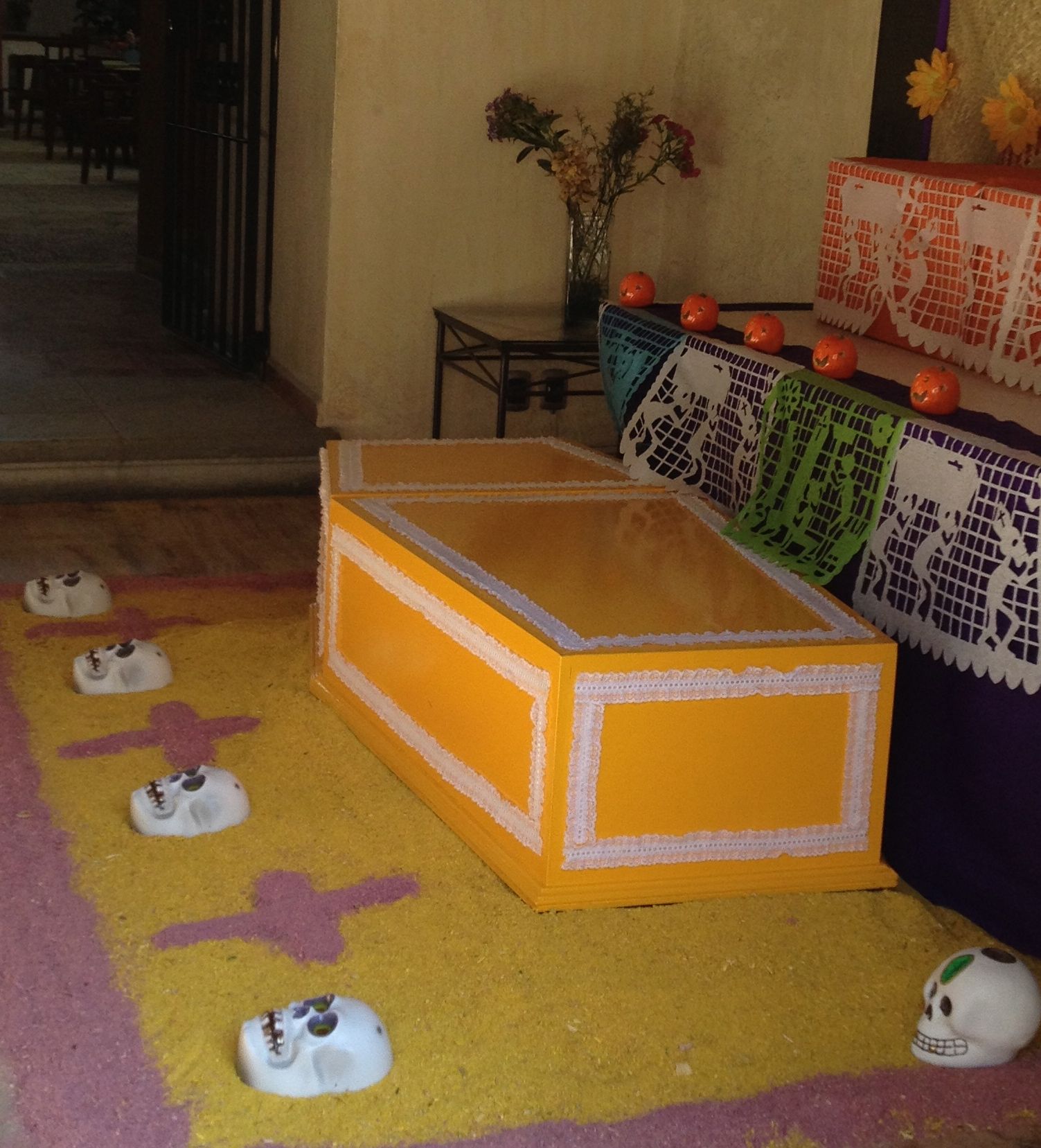
The city is beginning to look a lot like… Dia de Los Muertos.
I saw this beginning of an altar at a hotel. According to http://oaxacalive.com/muertos.htm:
A typical altar begins with a table on which are placed boxes to represent the tombs and all is covered with a white tablecloth or sheet or with papel picado, paper cutouts with special themes related to the season. Long stalks of sugarcane or carrizo are tied to the front legs of the table, formed into a triumphal arch above the altar and decorated with flowers. The images of the saints and the family dead are placed on the altar and everywhere there are flowers: The golden flower of death, the Zempoalxochitl, the vibrant red cresta de gallo, perhaps some rich purple agapantos and the pure white nube.
The special offerings of food may include mole, nicuatole, pumpkin cooked with brown sugar, cane sugar and tejocotes. Beautifully decorated pan de muerto, chocolate, pecans and peanuts. Cooked chayote and fresh fruits – oranges, lemons, bananas, jícama, tejocotes, nísperos and pineapple. If the deceased smoked or drank, then cigarettes and mezcal are placed on the altar together with any other special foods or tributes which were a favorite in life. If the altar is for an “angelito” or dead child, it will also include favorite toys and many white flowers. Then comes the lamp with oil of higuerilla, the wax candles, white or yellow adorned with black crepe paper. An especially elaborate altar may also feature a colored sand and seed painting on the floor in front of it representing a particularly esteemed saint.
I have heard Mexicans believe that it is believed that people die three times:
1. When their body dies.
2. When they are buried.
3. When someone forgets the one that has passed.
Because of this communal practice of celebrating the dead, number three does not happen. Both communal and personal, this observance welcomes the dead back home and preserves the memory.
Elephants, an animal associated with memory, also remember their dead.
From: http://www.andrews-elephants.com/elephant-emotions-grieving.html#.UIDm1ULGJSo
The elephant’s capacity for sadness and grief is truly unique amongst members of the animal world, as it is particularly complex in terms of emotions. While most animals do not hesitate to leave the weak and young behind to die, elephants are distressed by the situation, and continue to show signs of this grieving for extended periods of time.
Because elephants live in such close-knit herds and live for about as long as humans do (approximately 70 years), they form strong bonds with those around them. When these ones die, the rest of the herd mourns that death. Mothers and aunts are also prone to mourning a still-born calf. The mother of a dead calf (whether at birth or later on in its life) shows her grief through her physical disposition. Her eyes are sunken and her ears drooping, her mood is visibly miserable.
The herd will take great care in the burial of the dead. Cows walk to and fro in search of leaves and twigs. They use this to cover the body of the deceased in an act of dignity for the dead. When a herd encounters the skeleton of a dead elephant, they have shown an undeniable fascination with the bones. The cows will mull over the bones, fondling them in thoughtful contemplation. Cows take bones from the skeleton and scatter them, hiding them under bushes in the surrounding area. This behaviour is thought to be as a protection for the rest of the herd, as it throws stalking predators off the trail of the cows and their calves. Even years later, elephant have been observed revisiting the site where one of their herd or family had died. They will remain here for days at a time, mourning the loss of that one.

 shewhodaresnothing