
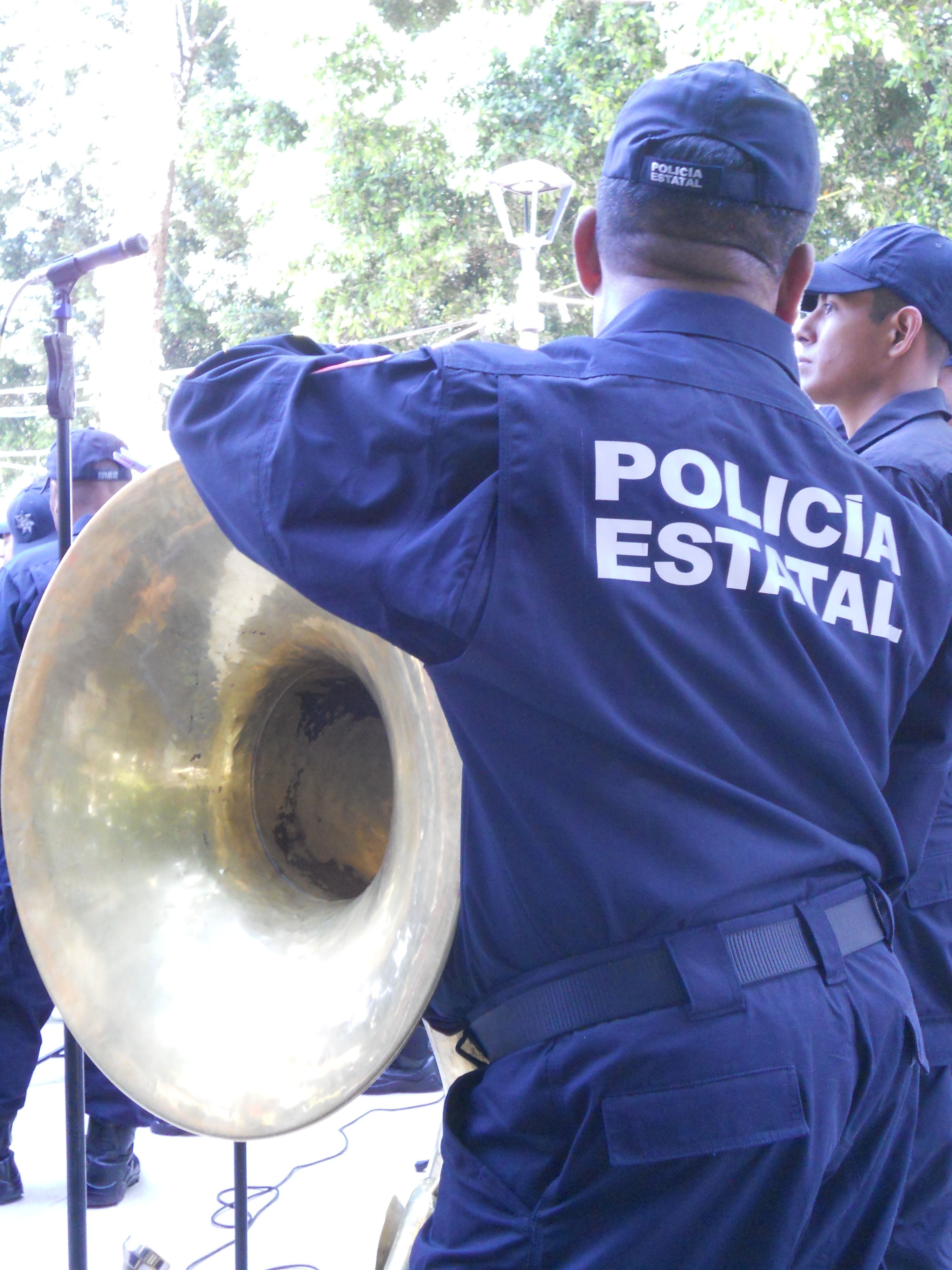
As many people as possible crowded into the shade; those in the sun had sombrillas (umbrellas) and sombreros (hats), rebolsos (shawls) and banderas (flags) to block the sun. We stood listening to the military and police marching bands, waiting for the desfila (parade) to begin. We waited so long, children began crying and even the strongest men were no longer holding their children on their shoulders. People began whistling (as they would to summon a dog, for the parade. And so, at last, it arrived.
And, it had to arrive because everything needed to be wrapped up by 11:40, the time the revolution began.
The desfila was like no other parade I have witnessed. It featured: students in their perfectly pressed uniforms, the police, various branches of the military, firefighters, ambulances, nurses, doctors, the Red Cross, and so on. It was a representation of federal and civil departments, and they all marched, waving their arms as they strode down the quarter of the Zocalo where the parade took place. We watched for nearly an hour and a half; people hooted out: “Bravo” to the uniformed crews as they felt motivated.
The horses ridden by charros were the last of the parade, and people knew it and began filing into the shade of the Zocalo to listen to the rest of the presentation that focused on the revolution. Part history lesson, part patriotic celebration, part Sunday on the Zocalo, this observance was both reverent and full of revelry, including red, white, and green confetti.

 shewhodaresnothing